
Snake Plant in Low Light: Why It Works and What Kills It
A snake plant in low light looks the same, which is exactly the problem. The dimness does not hurt it. The slower-drying soil that comes with it does.
Snake Plant in Low Light: Why It Works and What Kills It
The snake plant is one of the few houseplants that looks more or less the same in a dark corner as it does by a window. That is the whole basis of its reputation, and it is true.
It is also the trap. A plant that shows no visible complaint gives you no feedback, and the thing that actually kills snake plants is not the darkness. It is the slower-drying soil that comes with it.
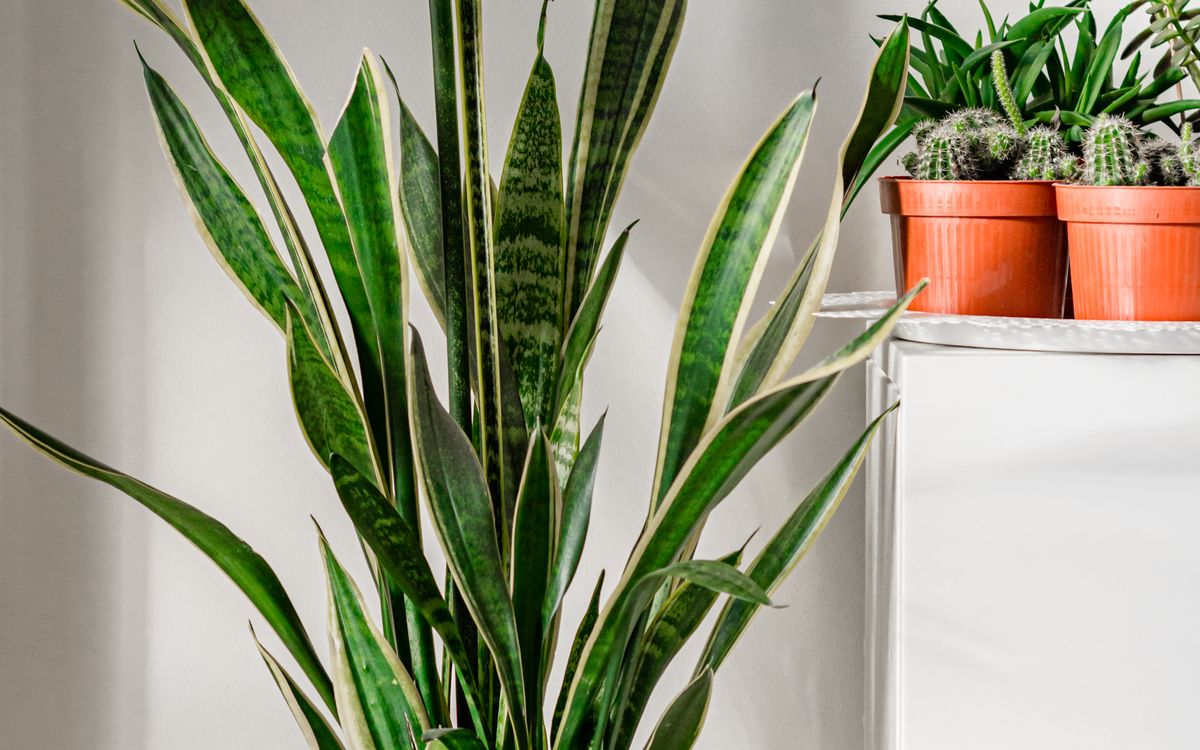
The short version
- The low light reputation is earned. Every source I checked agrees, which is rare.
- Overwatering kills it. Forgetting it does not. That asymmetry is the whole plant.
- A dim spot dries slower, so the same watering routine becomes too much water.
- Slow growth in low light is normal, not a symptom.
- It is toxic to pets, with saponins, and cats show a specific sign.
Yes, a snake plant really does tolerate low light
The sources do not argue about this one, which is rare enough to be worth saying.
Penn State Extension puts it directly: Snake plant enjoys bright indirect light but tolerates low-light areas very well. Keep it out of the direct sun, as it can burn.
NC State Extension files its light requirement as Partial Shade (Direct sunlight only part of the day, 2-6 hours). Its list of challenges the plant resists runs drought, dry soil, heat, heavy shade and humidity, and heavy shade appearing on that list is about as direct as a plant database gets on this question.
Illinois Extension classes it as a low light plant under its old name, Wisconsin recommends it for low light conditions, and Clemson has it on the low light list. Compare that with pothos, where three services gave three different answers. Snake plant is the genuine article.
Note the second boundary in the Penn State sentence, though. It tolerates very little light and it also objects to full sun. The tolerance is wide, not infinite, and it runs in both directions.
The asymmetry that matters
Penn State states the rule that should govern how you water it: Water only when it is dry. You can kill it by overwatering, but you can neglect to water it for a month or so, and it will be no worse for wear.
One direction is fatal and the other is survivable for weeks.
Almost nothing else you keep indoors has forgiveness this lopsided. Most plants punish both extremes on a roughly similar timescale, which is why the usual advice is to aim for a middle. With a snake plant, aim for the dry side rather than the middle.
Penn State describes it as a long-lived, unfussy, succulent houseplant, and being a succulent is the mechanism. It is also the exception in that family, since most succulents lose their shape permanently in the light a snake plant shrugs off: growing succulents indoors. Those thick upright leaves are water storage. The plant arrives with its own reserve, so a missed watering draws down a buffer rather than causing a shortage.
Why a snake plant in low light is at more risk from water
What catches people here has nothing to do with the plant disliking darkness.
A pot in a dim corner loses water more slowly for two reasons at once: less evaporation from the surface, and a plant that is transpiring less because it is doing less. So the interval that was correct on a bright windowsill is too short in a dark one, without anything in your routine changing.
A bathroom stacks both effects, which is why a snake plant is a good choice for that room and also the place people most often drown one: bathroom plants for low light.
Now combine that with the asymmetry above. The one error this plant does not forgive is the one that a dim position makes more likely. That is why "low light plant" is a slightly dangerous label here: it is accurate about the light and silent about what the light does to the schedule.
The practical answer is to stop watering on any schedule at all and check instead. Overwatering vs underwatering covers how to tell what is happening in the pot, and with a snake plant you can afford to err further toward dry than with anything else in the plant section.
If you want a sense of what your specific corner provides before deciding where to put it, the light estimator will give you a band.
What "not growing" means here
A snake plant that has not visibly changed in six months is usually fine.
NC State records its growth rate as medium, and medium in good conditions becomes very slow in a dim room. Unlike a pothos, which announces poor light by losing its variegation and shrinking its leaves, a snake plant in low light mostly just does less of everything without looking any different.
That is worth internalizing, because the instinct when a plant seems static is to intervene: more water, more fertilizer, a bigger pot. All three are ways to hurt this species. Stillness is its normal response to a dim room, and it is not a request for help.
The signals that do mean something are soft or mushy leaf bases, leaves toppling at the soil line, or a sour smell from the pot. Those are water problems, and they are the ones to act on.
What to do with a damaged leaf
Dried tips, a crease from being knocked over, a split down one edge. The question is always the same three options: leave it, trim the damaged part, or cut the whole leaf off at the base.
Start with what trimming does and does not achieve. Iowa State is direct about it for houseplants generally: Trimming the brown portions off the leaves with a scissors can improve appearance, but new browning will occur if the root cause is not addressed. Cutting is cosmetic. It does nothing about why the damage happened, and on a snake plant the usual why is water rather than air, for the reasons above.
Three practical points follow from that.
A damaged leaf is still a working leaf. Brown tissue at the tip is dead, and the rest of the leaf is not. A leaf that is 80 percent green is still doing 80 percent of its job, and removing it costs the plant that whole contribution to solve a problem that is entirely visual. In a dim room, where the plant is already running on a thin margin, that trade is worse than it looks.
Trim the tip only if the look bothers you. Cut following the leaf's own taper rather than straight across, and leave a thin margin of brown rather than cutting into living tissue. The cut surface stays a cut surface: a snake plant leaf does not re-point itself, so the shape you cut is the shape you keep.
Cut the whole leaf at the base only when the base is the problem. A leaf that is soft at soil level, toppling, or coming away when pulled has rotted rather than been damaged, and that one goes. That is the same signal listed above, and it means checking the rest of the pot rather than only removing the leaf.
A healthy leaf you remove for space or symmetry does not have to be thrown out. Penn State notes that While you can take leaf cuttings to begin new plants, it is most easily propagated by division, so a leaf cutting is a slower route than division but a real one, with the variegation caveat below.
If you have pets
Worth knowing before it comes up rather than after.
Penn State is explicit: If you have a pet, please note that all species of snake plant are toxic as they contain saponin toxins.
NC State rates the poison severity as low and records what ingestion looks like: Toxic if ingested: vomiting (occasionally with blood), depression, nausea, diarrhea, anorexia, hypersalivation, dilated pupils (cats). The sap can cause skin irritation.
Low severity is not the same as harmless, and a curious cat and a plant with stiff chewable leaves is a plausible combination. Put it somewhere a pet cannot reach if that applies to your household.
If a pet or child has actually eaten part of one, call a veterinarian or a poison control line rather than reading about it. Nothing on this page is a substitute for that call, and the time spent searching is the wrong use of the first hour.
Saponins put the snake plant in the same group as dracaena and corn plant, which produce a different picture from the aroids most people also own. The comparison, and Clemson's list of non-toxic alternatives, is in houseplants toxic to cats and dogs.
Making more of them
One upside of a plant that grows slowly is that it eventually grows sideways instead.
Penn State's note: While you can take leaf cuttings to begin new plants, it is most easily propagated by division. After a few years, the plant will create offspring. Illinois describes the division procedure itself, along with why the popular jar of water is the weaker route for most plants: how to propagate houseplants.
Division is the reliable route, and it has a practical advantage in a dim apartment. A leaf cutting has to build a whole root system from nothing, which needs energy the plant is not making much of in low light. A division arrives with roots already attached.
One quirk worth knowing: leaf cuttings taken from variegated cultivars often come back plain green, because the variegation does not reliably carry through that route. Division keeps it.
Worth noting how far the genus stretches on watering, since the snake plant sits at one end of it. Lucky bamboo is also a Dracaena, and it spends its life standing in a vase of water.
Common questions
How often should I water a snake plant in low light? Less often than you would in a bright spot, and only when the soil is dry rather than on a schedule. Penn State says you can kill it by overwatering but can neglect watering for a month or so with no harm, which tells you which direction to err in.
Can a snake plant survive with no light at all? No plant can, but this one comes closer than most. Penn State says it tolerates low-light areas very well while warning against direct sun. A windowless room still needs a lamp, and grow lights for houseplants covers what to look for and what one costs to run.
Are snake plants toxic to cats? Yes. Penn State notes all species contain saponin toxins, and NC State lists vomiting, diarrhea, hypersalivation and dilated pupils in cats among the effects of ingestion, rating severity as low. Contact a vet if it happens.
Why is my snake plant not growing? Most likely light, and most likely not a problem. NC State puts its growth rate at medium in good conditions, and a dim room slows that considerably. A static snake plant is usually a healthy one being patient.
What does an overwatered snake plant look like? Soft or mushy leaf bases, leaves falling over at soil level, and sometimes a smell from the pot. Because the leaves store water, damage shows at the base before the tips.
One thing to do differently
When you are unsure whether to water it, do not.
That advice is wrong for most houseplants and right for a snake plant in low light, because of the asymmetry: a month of neglect costs you nothing, while one watering too many can cost you the plant. Put the can down and check again in a week.