
Growing Succulents Indoors: The Winter Arithmetic Does Not Work
Growing succulents indoors asks for ten hours of bright light. In December a northern apartment has nine hours of daylight in total, before any walls.
Growing Succulents Indoors: The Winter Arithmetic Does Not Work
Growing succulents indoors runs into a number that no amount of good care gets around. The published requirement is ten or more hours of bright light a day. At the latitude of most of the United States, the shortest day of the year is nine hours and twenty minutes long, in total, before a single wall gets involved.
So the stretching that happens to apartment succulents every winter is not a failure of attention. It is a shortfall you can calculate in advance, and the useful question is what to do about a deficit rather than what you did wrong.
The short version
- Ten or more hours of bright light is the stated requirement. Six to eight is the floor.
- A December day at 40°N is 9h20m long, so a window cannot supply it.
- Stretching is permanent. The plant grows out of it; it does not shrink back.
- Water on a wet-dry cycle, roughly every two to three weeks, and never leave it standing.
- Two parts mineral to one part organic is the published soil ratio.
How much light do succulents need indoors?
More hours than most people assume, and the hours matter more than the intensity.
Iowa State puts the problem first and the number second: Light is often one of the most limiting factors when growing succulents indoors. Then the requirement: They need ten or more hours of bright, indirect light (indirect light is bright enough to cast a shadow, but not in direct sun), with a floor attached, since Some species tolerate lower light levels, but most need at least six to eight hours.
A second extension source measures the same requirement in a different currency, which is worth having because it shows the requirement is a dose rather than a single number. UGA divides a home into four light areas and defines the strongest one by time: Sunny light areas: at least 4 hours of direct sunlight. Ten hours of bright indirect light or four hours of direct sun are two routes to the same place, since intensity and duration trade against each other. Both are stated in hours, and neither is a description of a room that merely looks bright.
Now put those against the calendar. Day length at 40 degrees north runs from 15 hours 1 minute at the June solstice to 9 hours 20 minutes at the December solstice, according to the US Naval Observatory tables used in houseplant winter care.
Nine hours and twenty minutes of daylight, of which the first and last are barely light at all, in a room where the plant sees a fraction of the sky. The ten-hour requirement goes past hard to meet in a northern winter and becomes arithmetically unavailable, and it stays unavailable from roughly November to February.
That is the honest frame for this plant in this kind of home. Summer is fine. Winter is a deficit you either accept or fill with a lamp.
Why is my succulent stretching?
Because it is doing the only thing it can do, and the result does not undo itself.
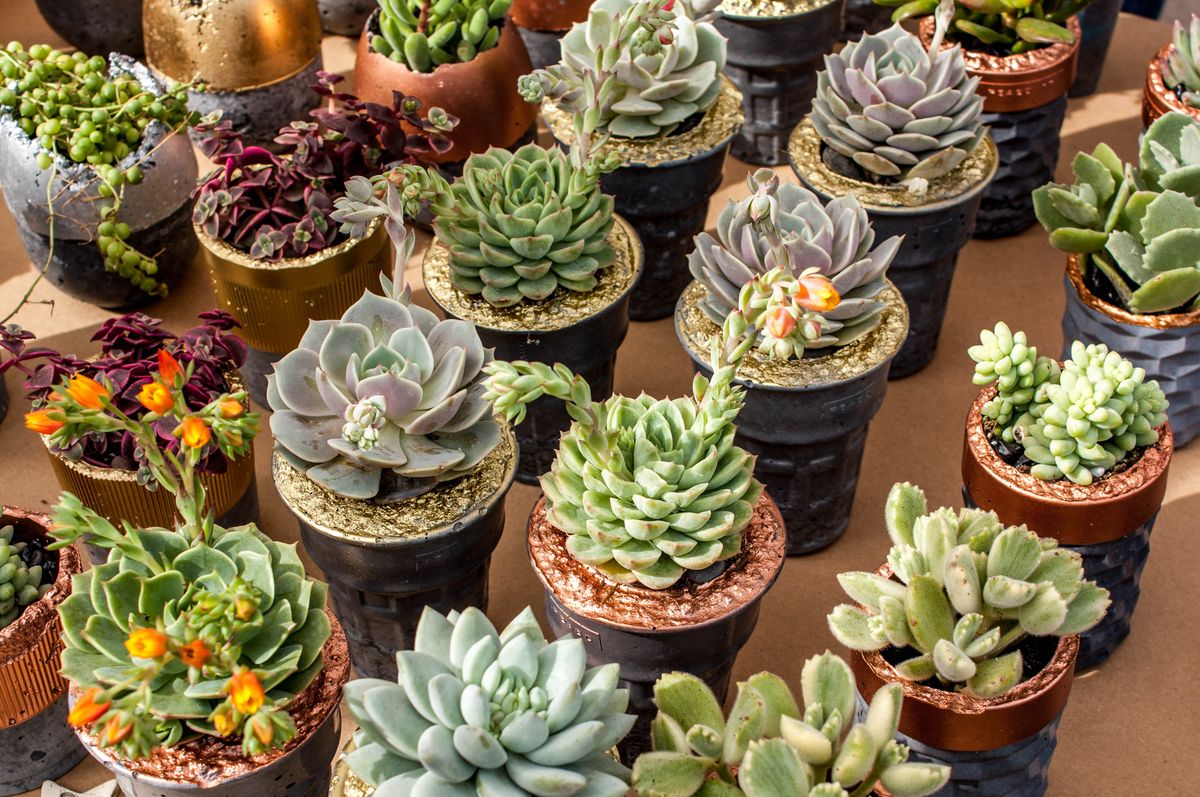
Iowa State describes the response in four words: In low light, plants become lanky and pale. Their prescription is to Move them to brighter locations or use supplemental light like high-output, full-spectrum light fluorescent or LED light fixtures.
The part that separates this from the other plants covered here is permanence. A pothos in poor light produces small leaves and recovers its proportions when the light improves. A succulent that stretches has built a longer stem, and stems do not contract. North-facing window plants makes the same point from the other direction: succulents stretch, pale, and lose their shape, and unlike a foliage plant they do not get their form back.
Which changes what "fixing it" means. Improving the light stops the stretching and makes the next growth compact, leaving a plant with a stretched section in the middle. The only way to remove that section is to cut it off and root the top, which is a normal and easy thing to do with most succulents but is a decision rather than a recovery.
One habit worth adopting either way. Iowa State: Rotate plants to prevent lopsided growth. In a room lit from one side, a succulent leans, and leaning is stretching with a direction.
Can succulents live in low light?
Live, for a while. Keep their shape, no.
The site draws the same distinction for pothos and snake plants, except that for succulents the cost of surviving rather than growing is visible and permanent. A stretched echeveria is a healthy plant. It is a plant that recorded your light level in its own body.
Worth noting a genuine disagreement between sources here, because the site's own south facing window plants page cites Illinois and UGA putting a south sill at direct-sun levels and calls it a good place for cacti and succulents. Iowa State asks for bright indirect light instead, explicitly not in direct sun, and warns about moving them outdoors into part-sun to protect from bright sun, as intense light can damage leaves and stems.
Both are defensible and the resolution is acclimation rather than a correct answer. A plant grown for months under indoor light burns on a sill it would have handled if it had got there gradually, which is the two-hours-a-day procedure in the south window article. What neither source disputes is the duration: ten hours of bright light, whether that light is direct or not.
How often to water succulents indoors
Less often than other houseplants, and thoroughly when you do. Not a little and often.
Iowa State: Use a wet-dry cycle: water thoroughly, wetting the entire root ball until it drains, then let the soil dry completely before watering again. The limit is absolute: Succulents will not tolerate staying wet, and Never allow water to sit for more than a few hours in trays, sleeves, or double pots.
The interval they give is once every two or three weeks, with the honest caveat that it depends on soil, light, humidity and container. In a dim winter room, stretch it. This is a plant where the pot's weight, described in moisture meter for houseplants, is more reliable than any schedule.
The diagnostic they give is unusually clean, and it works in both directions:
| What you see | What it means |
|---|---|
| Lower leaves wrinkled or drying up | Too dry |
| Leaves yellow, stems soft and weak | Too wet |
| Lanky and pale | Not enough light |
That middle row is the one that kills plants. Iowa State: Plants that yellow, develop soft stems or leaves, or collapse are often in overly wet soil conditions.
One correction to a widespread belief, from the same page. Succulents are not improved by neglect: growth can be greatly accelerated when they are provided with regular moisture utilizing a wet-dry cycle of watering. The dry half of the cycle is required. The forgetting is not.
A succulent soil mix recipe
Two parts mineral, one part organic, and the reason is drainage speed rather than nutrition.
Iowa State explains why ordinary mix fails: succulents need sharp-draining soil that dries quickly and doesn't hold too much moisture, and Typical potting soil retains too much water, risking root rot.
Their ratio: A good mix is one-third organic material and two-thirds mineral material. To build it, combine one part organic material (potting soil, pine bark, compost, or coir) with two parts mineral material (perlite, coarse sand, pumice, or fine gravel).
Two thirds mineral is far grittier than a bagged cactus mix usually is, and it is worth measuring rather than eyeballing. The container matters alongside the mix, and unglazed terracotta suits this plant better than anything else for the reasons in best pots for houseplants: the walls lose water, which is a drawback for a calathea and exactly the point here.
The one condition your apartment is already good at
A small piece of good news after all the arithmetic.
Iowa State on humidity: It's rare for indoor conditions to be too dry for succulents. The dry winter air that causes brown tips on everything else, and that invites spider mites, is not a problem for this group at all.
Temperature is similarly easy: Temperatures between 55°F and 75°F with nights being cooler than days are ideal, which is an ordinary heated flat, and which sits above the chilling threshold discussed in houseplant cold damage.
Air movement is worth arranging, and it pays twice. Iowa State: Moving air helps dry soils, lower humidity, and can reduce the risk of insect pests like mealy bugs and spider mites. A small fan near a crowded shelf shortens the wet half of the cycle and makes the plants less attractive to mealybugs.
So light is the single hard constraint. Everything else about growing succulents indoors is straightforward in exactly the kind of apartment that struggles with tropical foliage.
Growing succulents indoors through the winter deficit
Three options, and they are not equally good.
Aloe is the species this happens to most visibly, because a rosette that opens up and flattens reads as a plant collapsing rather than one reaching, and it is worth knowing the difference before reacting: aloe plant dying.
Accept the stretch and cut in spring. Free, and honest about what is happening. The plant survives, records the winter in its stem, and you behead and re-root in April. Many people run this cycle deliberately. Succulents are one of the groups whose cut surface must dry and callous before planting rather than going straight into a medium, which is covered in how to propagate houseplants.
Move it to the best sill you have, in autumn, before the deficit starts. Distance from glass costs more than orientation for this plant, because it needs hours of brightness rather than a burst of intensity. Check what the window actually gives with the light estimator rather than trusting the compass.
Add a lamp on a timer. The only option that closes the arithmetic, and the one Iowa State names. Ten hours of supplemental light is well inside the ceiling Illinois Extension gives for photoperiod, so a timer running from before dawn to after dusk is safe. Sizing and running cost are in the grow light calculator, and the lamp itself in grow lights for houseplants.
Buying the lamp in September rather than January matters more here than for any other plant on this site, because the deficit is on a schedule you can read off a calendar.
Common questions
How much light do succulents need indoors? Ten or more hours of bright light a day, per Iowa State, with six to eight as the minimum for most species. In a northern winter that requirement exceeds the total hours of daylight available, which is why indoor succulents stretch from November onward.
Why is my succulent stretching? Not enough light. Iowa State describes plants in low light becoming lanky and pale. Improving the light stops further stretching but does not shorten what has already grown, so the stretched section stays unless you cut and re-root the top. The jade is the succulent where this shows most clearly, because two extension services publish opposite light figures for it: jade plant light requirements.
Can succulents live in low light? They can survive for a long time, but they will not keep their shape, and the change is permanent rather than cosmetic. Snake plant is the exception worth knowing about, since it tolerates genuinely low light better than most.
How often should I water succulents indoors? Roughly every two or three weeks, using a wet-dry cycle: soak the whole root ball until it drains, then let it dry completely. Iowa State stresses that succulents will not tolerate staying wet and that water must never sit in a tray or outer pot.
What is a good succulent soil mix? Iowa State's ratio is one-third organic to two-thirds mineral: one part potting soil, bark, compost or coir to two parts perlite, coarse sand, pumice or fine gravel. Ordinary potting soil holds too much water and risks root rot.
Do succulents need a humidifier? No. Iowa State notes it is rare for indoor conditions to be too dry for succulents, which makes them one of the few plants a dry heated apartment genuinely suits.
Growing succulents indoors: run the numbers before you buy
Count the hours your brightest spot is actually bright.
Not whether the room feels light, and not the compass direction. Stand at the window on an ordinary day and work out how many hours that spot has enough light to cast a soft shadow. If the answer is under six, growing succulents indoors at that spot will produce a stretched plant no matter how carefully you water it, and the only thing that changes the outcome is a lamp.