
North-Facing Window Plants: What Actually Grows There
North facing window plants get about 150 foot-candles at the glass. Which grow in that, which only survive it, and why the low light lists disagree.
North-Facing Window Plants: What Actually Grows There
You can grow plants in a north-facing window. You can grow fewer of them than the lists suggest, and the difference between the two is where most disappointment with houseplants comes from.
Two numbers frame the whole problem, both in foot-candles, which the glossary defines against the published scale. University of Illinois Extension puts a spot directly in front of a north window at roughly 150 foot-candles, which it classes as medium light. Move a few feet back from that same window and you are down to about 75, the bottom of its low light band. Half the light, gone in the length of a sofa.
The rest of this comes down to something less obvious: the published lists of plants for north facing windows do not agree with each other, and the plant they disagree about most is the one everybody recommends first. If what you want is low light plants that actually grow rather than merely hold on, that disagreement is the thing to understand first.
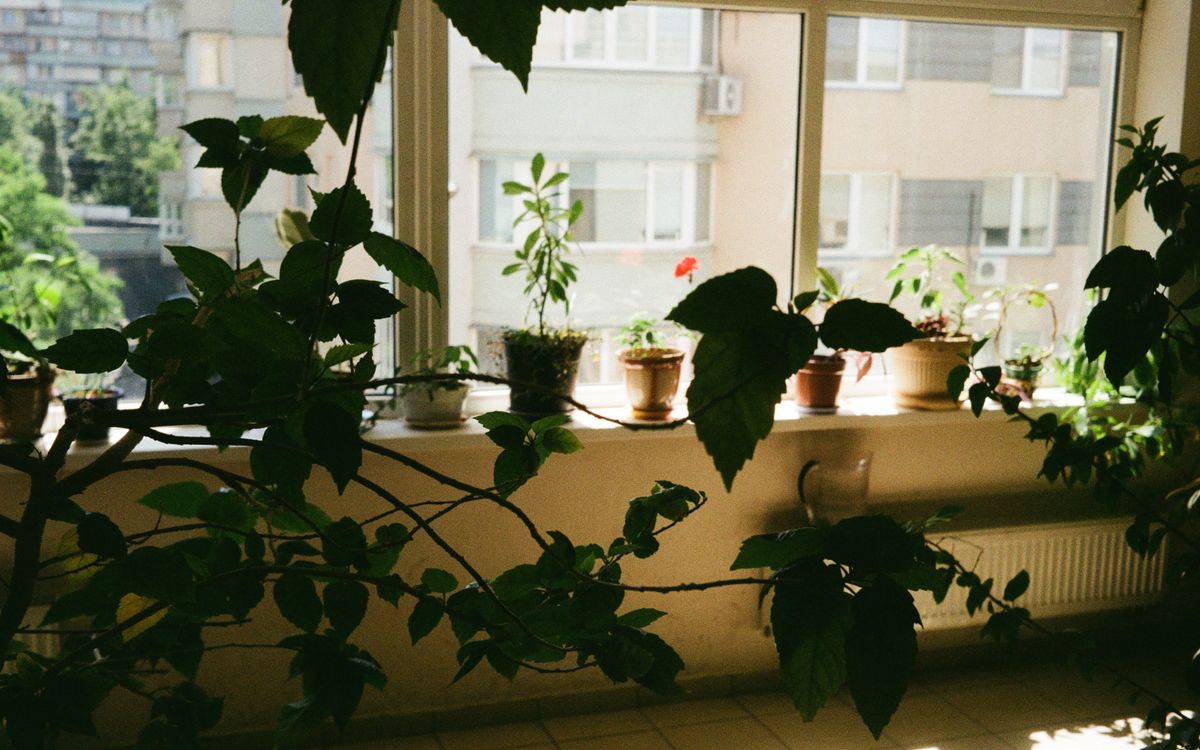
The short version
- Directly on the sill is a different room from three feet back. Get the plant as close to the glass as the space allows.
- A handful of plants are reliable here, and they are the ones every extension service agrees on: snake plant, peace lily, heart-leaf philodendron, cast-iron plant, Chinese evergreen, parlor palm.
- Pothos is not one of them, whatever the internet says. Two of three sources put it in medium light.
- "Tolerates low light" is a promise about survival, not about growth.
- If it has to be variegated, flowering, or a succulent, a north window is the wrong window.
How much light does a north-facing window actually give?
Enough for a specific set of plants, and only if they sit close to the glass.
Illinois Extension is unusually concrete about this. Its published scale runs from 75 foot-candles for low light, through 150 for medium and 300 for high or bright, up to 1,500 for direct sun. A north window on the sill sits at the medium mark. A north window a few feet back sits at the low mark.
That collapse over a short distance is the single most useful thing to know about this exposure. A south window can afford to lose light with distance because it starts at ten times as much. A north window cannot.
Which is also why a general answer is not much use. Your window has a building or a tree or nothing in front of it, sheer curtains or bare glass, and the plant sits somewhere specific in relation to all that. The light estimator walks through those six things and returns a band with a foot-candle range, which is a better starting point than any article can give you.
Why do the low light plant lists disagree with each other?
Because they are quietly answering two different questions, and neither one says which.
Take pothos, the plant that appears at the top of nearly every low light list ever published.
Illinois Extension's plant table files it under medium light, as Pothos, Scindapsus aureus (Epipremnum aureum), Medium. University of Wisconsin Horticulture describes it as preferring filtered medium light, and does not group it with their low light recommendations. Clemson, meanwhile, does list golden pothos and marble queen pothos among plants for low light.
Three respected extension services, two different answers about the most recommended houseplant in the world.
The scales themselves do not line up either. Illinois puts low light at 75 foot-candles. Clemson sets the floor of its low band at a minimum of 100. University of Minnesota Extension runs 50-150 umol m-2s-1 / 50-250 foot-candles / 10-15 watts for its low band, which swallows Illinois' medium category whole.
None of them is wrong. They are describing a gradient that has no natural edges, and they are drawing the line at different places depending on whether they mean "will not die" or "will do well".
Clemson makes that distinction explicit by publishing two numbers for every band: a bare minimum, and a range preferred for good growth. Its medium band reads Medium (minimum 100 to 150 ft-c, 200 to 500 preferred), and the preferred range sits well clear of the minimum. That gap between surviving and doing well is the entire story of a north window.
Their low band is looser, and the numbers in it do something odd: Low (minimum 100 ft-c, 75 to 200 preferred for good growth). Taken literally those numbers do not line up, because the preferred range starts below the stated minimum. That is not a reason to distrust Clemson. It is a fair illustration of how soft these boundaries are at the bottom of the scale, which is exactly where a north window lives. Treat any single foot-candle figure as a marker, not a threshold.
Which north facing window plants are actually reliable
The trustworthy list is the intersection, not the union. These appear as low light plants across the sources rather than in only one of them:
| Plant | Botanical name | Illinois | Clemson |
|---|---|---|---|
| Snake plant | Sansevieria trifasciata | Low | Low light list |
| Peace lily | Spathiphyllum sp. | Low (as White Flag) | Low light list |
| Heart-leaf philodendron | Philodendron scandens var. oxycardium | Low | Low light list |
| Chinese evergreen | Aglaonema | Low | Low light list |
| Parlor palm | Chamaedorea elegans | Low (as Neanthe Bella Palm) | Low light list |
| Cast-iron plant | Aspidistra | not listed | Low light list |
| Boston fern | Nephrolepsis exaltata | Low | listed as medium |
| Pothos | Epipremnum aureum | Medium | Low light list |
| Spider plant | Chlorophytum comosum | Medium | medium to bright |
Wisconsin adds a vote for the first of those, describing snake plant as suited for low light conditions and little maintenance required.
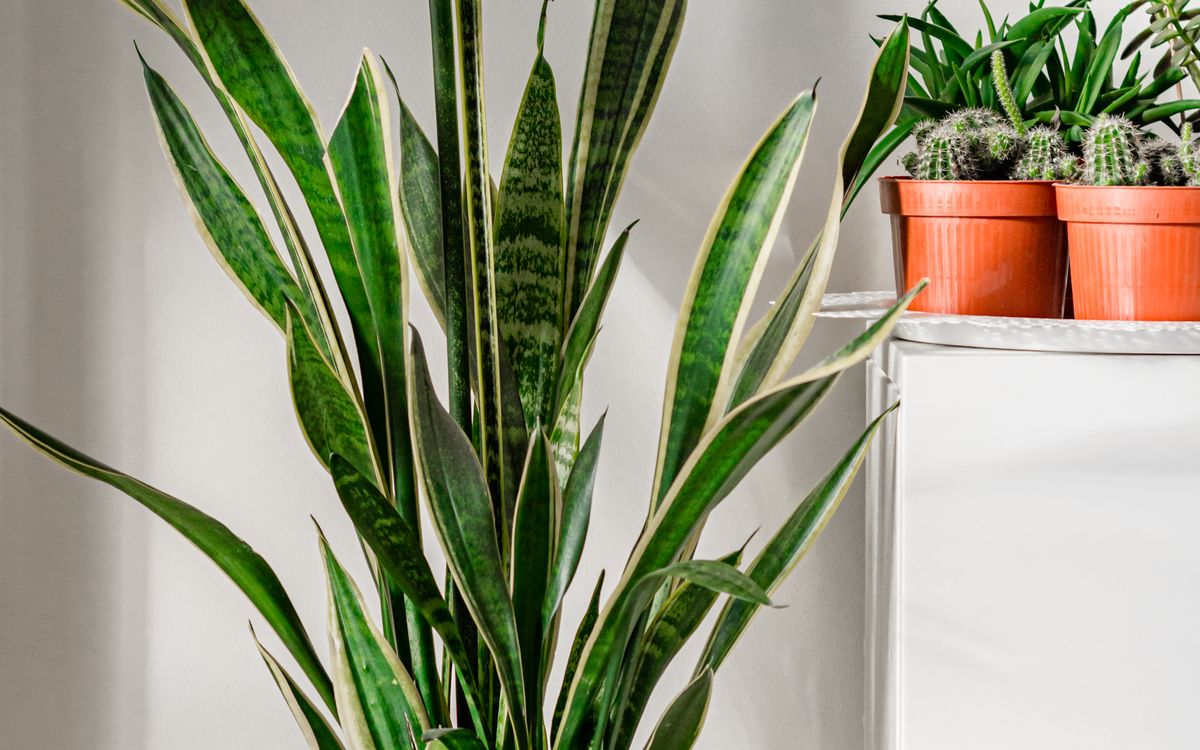
Six plants with no disagreement about them is a shorter list than you were promised. It is also the list that will not waste your money.
Note where Clemson places its low light plants, which matches the physical reality of the exposure: peace lily, heart-leaf philodendron and cast-iron plant can be placed several feet away from eastern exposures or in northern exposures. Northern exposure appears in the same sentence as "several feet from an east window", which tells you how these two situations rank against each other.
What "tolerates low light" is actually promising you
Survival. That is the whole promise, and it is worth reading literally.
Wisconsin Horticulture, writing about jade plant specifically, describes the outcome of insufficient light in plain terms: If light is too low, plants will be darker in color and stems may droop, but they will survive. Darker, drooping, alive. For a jade plant that is a diagnosis rather than a recommendation, and the same logic applies wherever a plant is described as tolerating conditions rather than preferring them.
A plant can hold its existing leaves for a very long time in light it cannot actually grow in. It will not add much, new leaves will come out smaller than the old ones, and the stem between leaves will stretch as the plant reaches. None of that reads as an emergency. It reads as a plant that is fine, until you compare it to a photograph from two years ago.
The same slide happens on a shorter clock every autumn, and a north window is the exposure with the least protection against it, since it has no direct sun in any month to lose or gain. Houseplant winter care covers how far the light actually falls and when.
The estimator on this site splits its answer three ways for that reason rather than giving you a single list. Grows, survives, and declines are three different outcomes, and every article that merges them into "tolerates low light" is hiding the one you probably care about.
What a north window will not do
Some things do not work here, and knowing which saves the money and the guilt.
Variegation. White and yellow sections of a leaf contain little or no chlorophyll, so a variegated plant is doing the same work with less equipment. In marginal light it responds by producing greener leaves, or by dropping the variegated ones. The plant is not failing. It is economizing. Worth knowing before you read that shedding as a deficiency, since yellowing has a different meaning depending on which leaves it hits.
Flowering. Flowers are expensive. The one common exception is worth knowing about: Clemson calls the peace lily one of the few foliage plants that will flower in low light, though it still needs more than a north sill to actually do it. Its other quirks are in peace lily drooping. Illinois puts the flowering and fruiting plants right at the top of its scale, with gardenia and citrus in the direct light category at 1,500 foot-candles, twenty times a north sill.
Succulents and cacti. They stretch, pale, and lose their shape, and unlike a foliage plant they do not recover their form once it is gone. A west-facing sill suits them, for reasons covered in east vs west facing windows, and a south one suits them better still: see south facing window plants for the one check to do before trusting that compass reading.
Anything Illinois files under high light. Its bright category, at 300 foot-candles, includes English ivy, jade plant, wax plant and weeping fig. That is double what a north sill delivers and four times what sits three feet back.
Before you buy more north facing window plants
Measure the distance first.
The gap between the glass and where you were planning to put the plant matters more than the plant's name, and it is the one variable you control for free. On the sill, a north window is a medium light spot with a real list of options. Three feet back, it is a low light spot with a much shorter one.
Two other things worth knowing before you commit. A dim spot dries out slowly, which changes the watering completely, and the usual instinct makes it worse: see overwatering vs underwatering for how those two look identical and what separates them. And if the honest answer is that your spot is below the low light floor, that is an argument for a lamp rather than for another plant, which the light section covers.
Common questions
What plants grow in low light indoors? The reliable ones are the plants every source agrees on: snake plant, peace lily, heart-leaf philodendron, Chinese evergreen, parlor palm and cast-iron plant. Growing is the operative word. Plenty of others survive in low light without adding much, and the difference between those two outcomes is what most lists leave out.
Is a north-facing window enough light for houseplants? For a specific set of them, yes, particularly on the sill rather than back in the room. Illinois Extension places a north window directly in front at about 150 foot-candles and a few feet back at about 75. Snake plant, peace lily, heart-leaf philodendron, Chinese evergreen, parlor palm and cast-iron plant are the ones the sources agree on.
Do pothos need sunlight? Not direct sun, but more light than its reputation suggests. Illinois Extension classes pothos as a medium light plant and Wisconsin describes it as preferring filtered medium light, while Clemson lists golden pothos among low light plants. A pothos in a dim corner will usually live. It will also grow slowly, with smaller leaves and longer gaps between them. The disagreement resolves once you look at cultivars, which is covered in pothos in low light: the heavily white ones need the most light and the plain green ones need the least.
Why is my low light plant not growing? Most likely because it is being held at the bottom of what it tolerates rather than at the level it prefers. Clemson publishes two figures for each band, a bare minimum and a range preferred for good growth, and for medium light those are a minimum of 100 to 150 foot-candles against 200 to 500 preferred. A plant parked at the minimum holds steady rather than developing, which looks like health until you compare it to a photograph from two years ago.
Can I use a grow light in a north-facing window? Yes, and it is the standard fix for a spot below the low light floor. A lamp lets you choose the light level rather than accept it, which is the only way to grow high-light plants in a north-facing room. How close you hang it matters more than what it costs, which is covered in what the grow light specs actually mean.
One thing to do differently
Take two steps back from the window, then look at where you were going to put the plant.
If those two steps are between the pot and the glass, you have given away half your light before choosing anything. Move the plant forward and a good number of the north facing window plants on this page stop being a gamble.
For how a north window's numbers stack up against the other three, see best window direction for houseplants. The same list of reliable plants covers the other dim room people ask about, for the same reason: bathroom plants for low light.