
Houseplants Toxic to Cats and Dogs: Sorted by What They Do
Most houseplants toxic to cats and dogs fall into two chemical groups, and the group tells you what happens. Plus what is genuinely dangerous.
Houseplants Toxic to Cats and Dogs: Sorted by What They Do
Most lists of houseplants toxic to cats and dogs are alphabetical, which tells you nothing you can use. The useful organizing principle is chemistry: nearly everything common in an apartment falls into one of two groups, and the group predicts both the symptoms and how worried to be.
If your pet has already eaten something, stop reading and call someone. Your vet, or the ASPCA Poison Control 24-hour hotline on (888) 426-4435. Clemson's own instruction is to identify the plant by common and botanical name and then Contact your local veterinarian immediately. Nothing on this page is a substitute for that call, and the time spent searching is the wrong use of the first hour. If you do not know what the plant is, identify a houseplant by its leaves is a key to the common ones, with toxicity noted per species.
The short version
- Two chemical groups cover most common houseplants: oxalates and saponins.
- Oxalates hurt immediately, in the mouth. Painful, rarely dangerous.
- Saponins upset the gut, and cats may show dilated pupils.
- A peace lily is not a lily. True lilies are a different and far worse problem.
- Ten common plants are non-toxic, and several are good in bad light.
Group one: insoluble calcium oxalates
The aroids, which is most of what an apartment plant shelf contains.
Clemson lists the same toxic compound for five of its eleven plants: pothos, philodendron, peace lily, dumb cane and anthurium all contain Calcium oxalate crystals.
The symptoms are identical across all five, because the mechanism is mechanical rather than metabolic. For pothos and philodendron, Clemson gives Oral irritation with pain and swelling of the lips, mouth, and tongue that causes problems with swallowing, along with excessive drooling and vomiting. For dumb cane the description is more vivid, and explains the common name: the crystals will embed in the lips and mouth, and cause the lips, mouth and tongue to swell enough to make talking difficult.
These crystals are needles, not poison. They are insoluble, so they are not absorbed and do not travel; they physically embed in soft tissue at the point of contact. That is why the reaction is immediate, oral, and dramatic, and also why it is usually self-limiting: an animal that bites one of these generally stops.
ASPCA puts the severity plainly for peace lily: While Peace lilies are toxic, it is very rare for them to cause serious or life-threatening problems.
Painful is not the same as safe, and a swollen mouth is a genuine emergency in a small animal. But the group as a whole is the one to be careful with rather than frightened of.
Group two: saponins
The dracaenas, which now includes the snake plant and lucky bamboo, the one sold as a bamboo and related to neither.
Clemson lists Saponins for corn plant and for snake plant, noting that snake plants are also in the Dracaena genus and have the same toxic reactions as corn plants. The reclassification of Sansevieria into Dracaena is not a detail here: it explains why they behave the same way.
Symptoms differ from group one in being systemic rather than oral. For corn plant: Vomiting (sometimes bloody), depression, anorexia, and hypersalivation. Cats may have dilated pupils. For snake plant: Vomiting, depression, diarrhea, abdominal pain, hypersalivation, anorexia, and tremors.
Dilated pupils in a cat is the signature worth memorizing, because it is specific to this group and it is a sign you would otherwise not connect to a plant. NC State records the same for snake plant and rates the poison severity low.
Aloe sits alongside this group with an extra compound. Clemson: Saponin and anthraquinone phytotoxins, with Vomiting, lethargy, and diarrhea. The detail that surprises people is in aloe plant dying: ASPCA notes the clear inner gel is considered edible, and the problem is the yellow latex just under the skin.
The three that do not fit either group
Worth knowing separately, and one of them is the most serious plant on Clemson's list.
Amaryllis. Toxic compound Lycorine and other toxic compounds, with the longest symptom list of the eleven: Vomiting, depression, diarrhea, abdominal pain, hypersalivation, anorexia, and tremors. A seasonal plant rather than a permanent resident, which is exactly why it arrives in December without anyone checking it.
Ficus and weeping fig. Ficin and ficusin, causing Gastrointestinal upset, skin irritation, blistering. Clemson notes all parts are irritating, especially the white, milky sap. This one also affects people handling cuttings.
Jade. The honest entry, and Clemson does not paper over it: toxic compounds Unknown, with symptoms Vomiting, depression, and poor coordination if ingested. Poor coordination in a cat that chews plants, with no other explanation, is worth mentioning to a vet.
The distinction that actually matters: true lilies
Everything above is in the painful-to-unpleasant range. This is not.
ASPCA, writing about lily toxicity generally, says of true lilies that All parts of the plant are toxic and small amounts can cause severe injury to the kidneys, and that even Drinking the water containing a lily or grooming pollen off their fur may cause problems as well. Daylilies belong in the same category: Like Lilium sp, Daylilies can cause severe kidney injury.
A peace lily is not a true lily. Neither is a calla lily or a lily of the valley, though those have their own problems. The plants that cause kidney failure in cats are Lilium and Hemerocallis, which arrive as cut flowers far more often than as houseplants, and the vase water counts.
If there is one thing to take from this page, it is the difference between those two paragraphs and the one above them.
Non toxic houseplants for pets
Clemson publishes a companion list of ten easily found houseplants that are non-toxic for pets, which is more useful than the warning list because it is actionable at the shop.
| Non-toxic plant | Light it wants, per Clemson |
|---|---|
| African violet | Bright, indirect |
| Bromeliads | Indirect |
| Hoya (waxflower) | Bright, filtered |
| Lemon button fern | Moderate, indirect, near a north window |
| Moth orchid (Phalaenopsis) | East-facing, bright indirect |
| Parlor palm | Bright, indirect |
| Peperomia | Indirect |
| Rabbit's foot fern | Bright, indirect |
| Spider plant | Bright indirect, tolerates some direct |
| Holiday cactus | Bright, not hot direct sun |
Two of these are genuinely useful in a dim apartment. Clemson puts the lemon button fern in moderate, indirect light near a north-facing window, which is the hardest brief on this site to fill, and moth orchids at east-facing windows with bright, indirect light conditions, covered in east vs west facing windows. The orchid's own care puzzle is the roots sprawling out of the pot, which are meant to: orchid aerial roots. If the one you bought was blue and came back white, that has a documented explanation too: why did my orchid bloom white.
One caution on the parlor palm before you buy it as the easy answer: Clemson notes it needs at least 10 hours of bright, indirect light to grow well, which is the same demanding figure that makes succulents difficult in a northern winter, for the reasons in growing succulents indoors.
Houseplants toxic to cats and dogs: the lookup table
| Plant | Toxin group | What Clemson lists |
|---|---|---|
| Pothos | Calcium oxalate | Oral pain, swelling, drooling, vomiting |
| Philodendron | Calcium oxalate | Same |
| Peace lily | Calcium oxalate | Same |
| Anthurium | Calcium oxalate | Same |
| Dumb cane (dieffenbachia) | Calcium oxalate | Same, crystals embed in lips and mouth |
| Snake plant | Saponins | Vomiting, diarrhea, tremors, hypersalivation |
| Corn plant (dracaena) | Saponins | Vomiting sometimes bloody, dilated pupils in cats |
| Aloe | Saponins + anthraquinones | Vomiting, lethargy, diarrhea |
| Ficus / weeping fig (and, by genus, the rubber plant) | Ficin, ficusin | GI upset, skin irritation, blistering |
| Jade | Unknown | Vomiting, depression, poor coordination |
| Amaryllis | Lycorine | Vomiting, tremors, abdominal pain, anorexia |
| True lily, daylily | Different category | Severe kidney injury. Emergency. |
What to do if my cat eats a houseplant
Clemson's procedure, in order:
- Identify the plant by both common and botanical name. A photo of the label, or of the plant, saves time on the phone.
- Contact your local veterinarian immediately, or
- Call the ASPCA Poison Control 24-hour hotline at (888) 426-4435.
Two things worth having ready before you call: roughly how much was eaten, and when. Both change the advice more than the species does.
Clemson's preventative advice is a purchasing habit rather than a management one: Always check with the ASPCA (American Society for the Prevention of Cruelty to Animals) List of Toxic and Non-Toxic Plants before purchasing a new plant. Thirty seconds in the shop beats a vet visit.
Common questions
Are pothos toxic to cats? Yes. Clemson lists pothos as containing calcium oxalate crystals, causing oral irritation with pain and swelling of the lips, mouth and tongue, difficulty swallowing, drooling and vomiting. Painful, and rarely life-threatening, but call a vet if a pet has eaten some.
Is a peace lily dangerous to cats? It is toxic but not in the way true lilies are. ASPCA notes it is very rare for peace lilies to cause serious or life-threatening problems, while true lilies and daylilies can cause severe kidney injury from small amounts.
Which houseplants are safe for cats? Clemson lists ten non-toxic options including African violet, bromeliads, hoya, lemon button fern, moth orchid, parlor palm, peperomia, rabbit's foot fern, spider plant and holiday cactus. For a floor-sized plant rather than a shelf one, NC State tags the areca palm non-toxic for cats, dogs and horses: areca palm dying covers what it needs and the one part of it that is not edible.
What are calcium oxalate plants? The aroid family, including pothos, philodendron, peace lily, anthurium and dieffenbachia. The crystals are insoluble needles that embed in soft tissue on contact rather than being absorbed, which is why the reaction is immediate and oral.
What should I do if my cat eats a houseplant? Identify the plant by common and botanical name, then contact your vet immediately or call ASPCA Poison Control on (888) 426-4435. Note how much was eaten and when.
Do dilated pupils mean plant poisoning? In a cat, it is one of the signs Clemson lists for dracaena and corn plant, which contain saponins. It is not proof of anything on its own, and it is worth mentioning to a vet along with what the cat has access to.
Houseplants toxic to cats and dogs: the shelf audit
Walk the room once with the ASPCA list open.
One correction to the framing of this whole page, from the poison-center figures collected in houseplant statistics: the exposures actually being reported are overwhelmingly children under five rather than pets, and five of the plants in the national top 25 are ordinary houseplants. A shelf a cat cannot reach and a shelf a toddler cannot reach are not the same shelf.
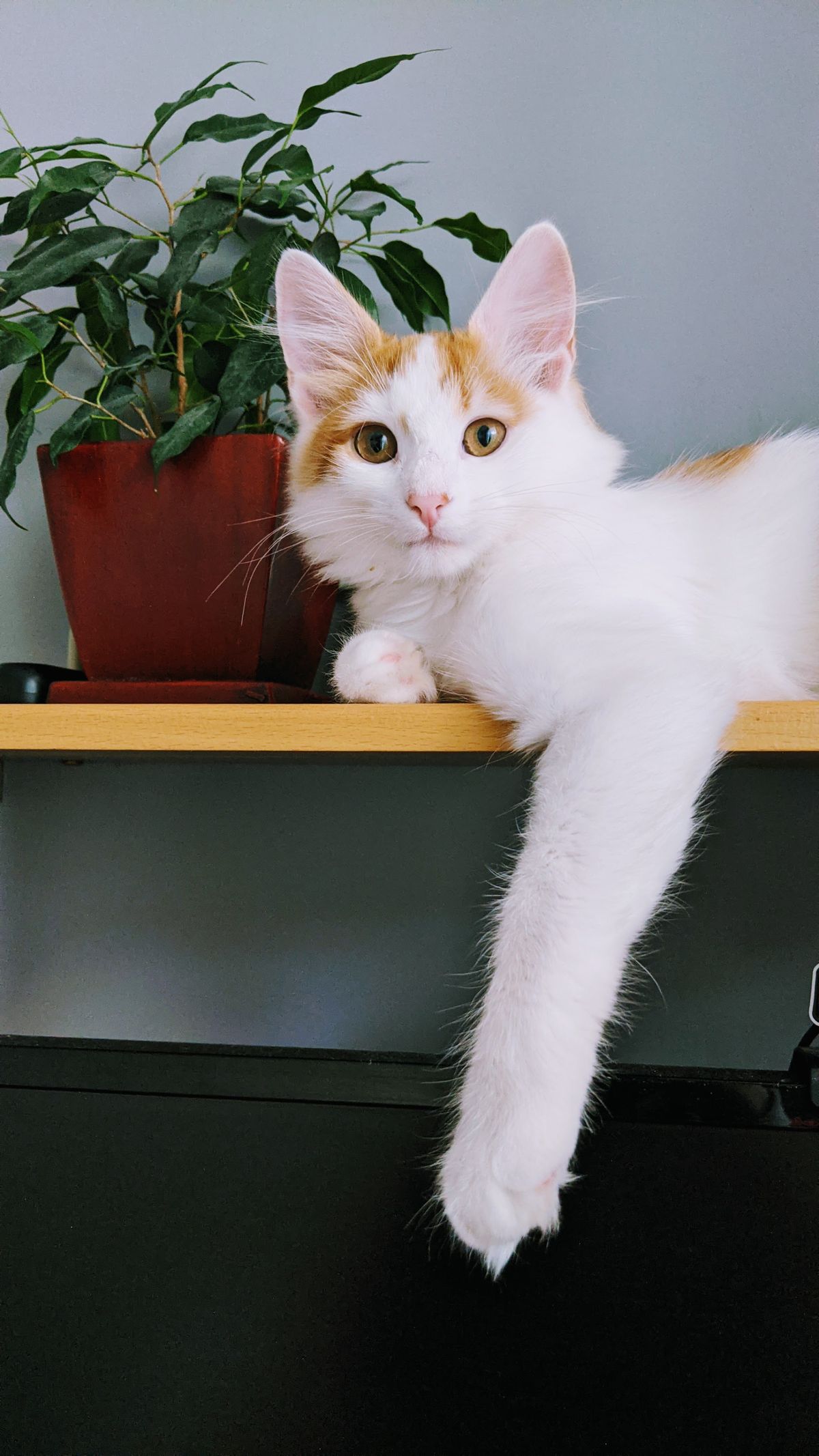
Not to remove everything, which is neither necessary nor what any of these sources recommend. The point is to know which of your plants are in which group before an incident, because the useful facts about houseplants toxic to cats and dogs are the ones you already have when you are standing in a vet's waiting room at nine at night.