
East vs West Facing Windows: Same Number, Different Day
East vs west facing windows sit in the same band on every light chart. The foot-candles match, the heat does not, and that decides what survives.
East vs West Facing Windows: Same Number, Different Day
Most light charts file east vs west facing windows in one row, as though the direction only decides how much light arrives. It also decides when, and a plant on a windowsill experiences four hours of direct sun very differently at 8am than at 5pm.
The intensity is comparable. The heat is not, because the room has been warming all day by the time a west window gets its turn. That single difference is why two windows with the same reading on a meter support different plants.
The short version
- East gives direct sun in the morning, then goes indirect. Cool light, low water loss.
- West gives direct sun in the afternoon, on top of a room that has been heating since noon.
- The extension sources disagree about where west belongs, and the disagreement is informative.
- Same foot-candle reading, different stress. A meter records intensity and ignores timing.
- Scorch is the failure mode on a west sill, not dimness.
What does an east-facing window actually give?
Direct morning sun, then a long indirect afternoon, and the least demanding conditions of any exposure that gets real sun.
University of Georgia Extension is unusually direct about ranking it: Windows with eastern exposure within the home generally provide the best light and temperature conditions for most indoor plant growth because plants receive direct morning light from sunrise until nearly midday. The pattern then changes on its own: As the morning progresses, the direct sun recedes from the room.
UGA rates the exposure on light and temperature together rather than light alone, and the next two sentences give the mechanism this whole article rests on: An eastern room is cooler than southern or western rooms because the house absorbs less radiant heat, and therefore Light from the east is cooler than that from the south or the west, and thus it causes less water loss from the plants.
Morning sun arrives at a building that has been cooling all night. Afternoon sun arrives at one that has been absorbing heat for six hours. The plant sits in both the light and the room.
What does a west-facing window give?
The same order of intensity, delivered when the room is at its warmest, and pointed at a plant that has already spent the day transpiring.
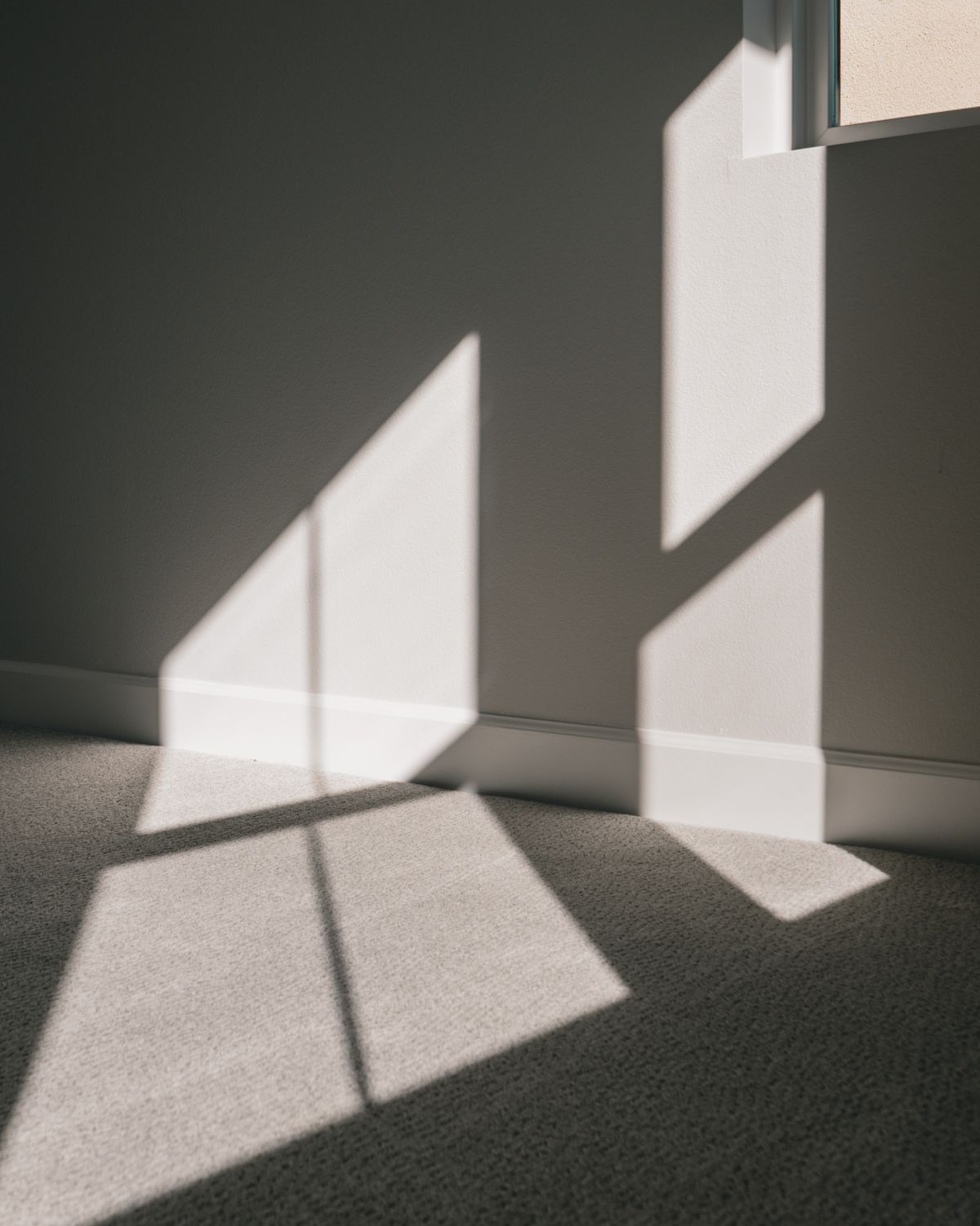
The direct sun starts somewhere in the afternoon and runs to sunset, so the peak of light and the peak of indoor temperature land on top of each other. On an east sill those two peaks are separated by most of a day.
That matters more in a rented apartment than in a house. A west room with no cross-breeze and a radiator under the window holds afternoon heat well into the evening, and a plant pressed against the glass is in the hottest part of it. The practical result has little to do with light quality. What it comes down to is that the same amount of it costs the plant more water.
Why do light charts treat east vs west facing windows as the same?
Because most charts record intensity only, and by that one measure the two are close. Where the sources start to differ is in what they do with west.
| Source | Where it files east | Where it files west |
|---|---|---|
| Illinois Extension | East/west window, directly in front, 300 foot-candles | Same row as east |
| UMN Extension | Medium-light plants suit east-facing windows | Medium light only near a west window and out of direct light |
| UGA Extension | Best light and temperature conditions | Grouped with south, not with east |
Illinois puts both in one line: High or Bright Light (300 foot candles) covers an East/west window: directly in front.
UMN keeps them adjacent but adds a qualifier to only one of them. Its medium-light plants belong in east-facing windows or near a west-facing window, but out of direct sunlight. East gets the window. West gets near the window, with direct sun excluded.
UGA breaks the pairing outright: Southern and western exposures are interchangeable for most plants. South is the strongest exposure in the northern hemisphere, and UGA is saying west behaves like it.
One more thing about that page, since it is worth knowing how thin the coverage of west actually is. UGA gives east, south and north a paragraph each. The word west appears exactly twice in the entire publication, both times inside a comparison to another direction. West is the exposure that gets described by what it resembles rather than on its own terms, which is a fair summary of how the whole category is handled.
Why the foot-candle numbers look wildly inconsistent
Worth clearing up before you compare any two charts, because the spread is large enough to look like an error.
Illinois puts an east or west window at 300 foot-candles. UGA says of east windows that Footcandle readings at these windows can reach 5,000-8,000. Those differ by a factor of twenty and both are correct, because they are measuring different moments. UGA's figure is the direct beam on the glass while the sun is on that side of the building. Illinois' figure is what the position provides across a normal day, direct sun included and averaged out.
Which means a single foot-candle number attached to a window direction is a summary of something that changes hour by hour. UGA lists what actually moves it: the presence of trees outdoors (may shade at certain times), roof overhangs (may shade at certain times), wall color (reflectance), window curtains, day length, time of day, and time of year. Two of those seven are clock and calendar. Charts carry neither.
The window light estimator on this site has the same limitation and says so on the page. It gives a band, and a band is a starting point rather than a reading.
What does too much light look like?
Upright leaves and pale, dried patches, usually on the side facing the glass.
UGA describes the signature: Symptoms of over-exposure are upright leaves and bleached, scorched leaves, with the instruction that follows from it, which is to Do not place high-light sensitive plants in direct sunlight (on a porch or in front of a window). UMN records the same outcome: Plants exposed to too much light may result in scorched and bleached leaves.
Three things distinguish scorch from the problems that get confused with it.
It is positional. The damage sits where the sun lands, so it appears on one side, on the upper leaves, or in a band across a leaf that a neighboring leaf was shading. Nutrient problems and root problems do not respect geometry that way.
The color drains rather than yellows. Bleached is the accurate word. The tissue goes pale, then papery and tan. That is different from the even yellowing covered in yellow leaves.
It appears fast, after a change. A plant that was fine for months and scorches in a week has usually just been moved, or the sun has moved. Late spring is when west sills turn, since the sun sets further north each week.
Brown edges without the bleaching are a different story and usually about water, which brown tips on houseplant leaves covers.
How to measure your own window without buying anything
UGA publishes a method that predates every app and still works, using a camera set to manual.
Set film speed to ASA 25 and shutter speed to 1/60, put a sheet of white paper where the plant sits, fill the frame with it, and adjust the aperture until the meter reads a correct exposure. Their table then converts the aperture: f/4 is about 150 foot-candles, f/5.6 about 300, f/8 about 600, f/11 about 1,200, and f/16 about 2,400. Each full stop doubles the reading, which is what makes the method work.
Two rows at the bottom of that published table both read f/2, against 40 and 75 foot-candles, so the smallest apertures are ambiguous as printed and are left out above. It matters little in practice, since anything below f/4 is a dim corner either way.
A manual camera app on a phone gives the same reading. Any app that lets you lock ISO to 25 and shutter to 1/60 and then reports the aperture it wants will do.
Take the reading twice, once mid-morning and once mid-afternoon. On an east sill the two numbers will be far apart, and on a west sill they will be far apart the other way. That gap is the thing this article is about, and no chart will tell it to you.
Putting the two side by side
| East window | West window | |
|---|---|---|
| Direct sun | Sunrise to nearly midday | Afternoon to sunset |
| Room temperature during it | Coolest part of the day | Warmest part of the day |
| Water loss | Lower, per UGA | Higher |
| Typical failure | Not enough light for high-light plants | Scorch on the glass side |
| Filed by UGA with | Nothing, ranked best on its own | South |
| Best for | Most foliage houseplants | Succulents, cacti, plants wanting a bright hot spot |
| Cheapest fix | Move closer to the glass | Sheer curtain, or one foot back |
East vs west facing windows: which should you actually use?
Put the plants you care about most on the east side, and treat the west sill as a resource rather than a problem.
A west window is genuinely good for anything that wants heat and brightness together. Succulents, cacti, and most flowering plants do better there than in a cool east room, and afternoon sun is the closest thing an apartment has to full sun.
What a west window is not good for is a tropical foliage plant pushed against the glass. That is the combination behind most scorched leaves in a rented flat, and it is fixable without moving anything far. A sheer curtain, or a foot of distance, cuts the direct beam while keeping the brightness.
The fourth exposure behaves unlike any of these three, since it spans the whole scale from direct sun on the sill to low light across the room: south facing window plants works through it. If neither window here is available, north-facing window plants covers the exposure with no direct sun at all, and houseplant winter care covers what happens to all four directions as the year turns, since a west sill in December is a much milder place than a west sill in July.
Common questions
Is a west facing window good for plants? Yes, for the right plants. It provides direct afternoon sun at high intensity, which suits succulents, cacti and flowering plants. UGA groups western exposure with southern rather than eastern, and notes that light from the west causes more water loss than light from the east. Tropical foliage plants usually need a sheer curtain or a foot of distance from the glass.
What are the best east facing window plants? Most common foliage houseplants, because UGA describes eastern exposure as giving the best light and temperature conditions for indoor plant growth. Pothos, monstera, philodendron, peace lily and prayer plants all do well with direct morning sun followed by indirect light.
Is a west facing window too hot for plants? It can be for tropical foliage plants, since the afternoon sun lands on a room that has been heating all day. The light itself is not the problem so much as the combined heat and water loss. Move the plant back from the glass or hang a sheer curtain, and the same window becomes usable.
Do plants get sunburned in a window? Yes. UGA describes the symptoms as upright leaves and bleached, scorched leaves, and advises against placing high-light sensitive plants in direct sunlight in front of a window. Glass filters the wavelengths that cause skin to burn, but it does not reduce the intensity or the heat much.
Which window is best for houseplants? East, for the majority of them. UGA ranks eastern exposure best on light and temperature together. South gives the most light and the widest swing through the year, west gives strong afternoon light with more heat, and north gives the least of everything. The full ranking in foot-candles, side by side, is in best window direction for houseplants.
One thing to do this week
Stand at the window you are unsure about, at 4pm, and put your hand flat on the sill.
If it is warm to the touch, that is what the roots of anything sitting there are in, for several hours a day, on top of the light. It is the fastest version of the east vs west facing windows question, it takes ten seconds, and it will tell you more about whether a plant belongs there than the number on any chart.