
Monstera in Low Light: Why the Leaves Never Split
A monstera in low light keeps growing. It just keeps growing juvenile leaves, small and solid, and the holes you bought it for never arrive.
Monstera in Low Light: Why the Leaves Never Split
A monstera in a dark room does not die and does not stop growing. It produces new leaves on schedule, and every one of them comes out small and solid, without a single hole.
That is the most confusing way a houseplant can disappoint you. Nothing looks wrong. The plant is visibly working. It is just never going to become the thing on the label.
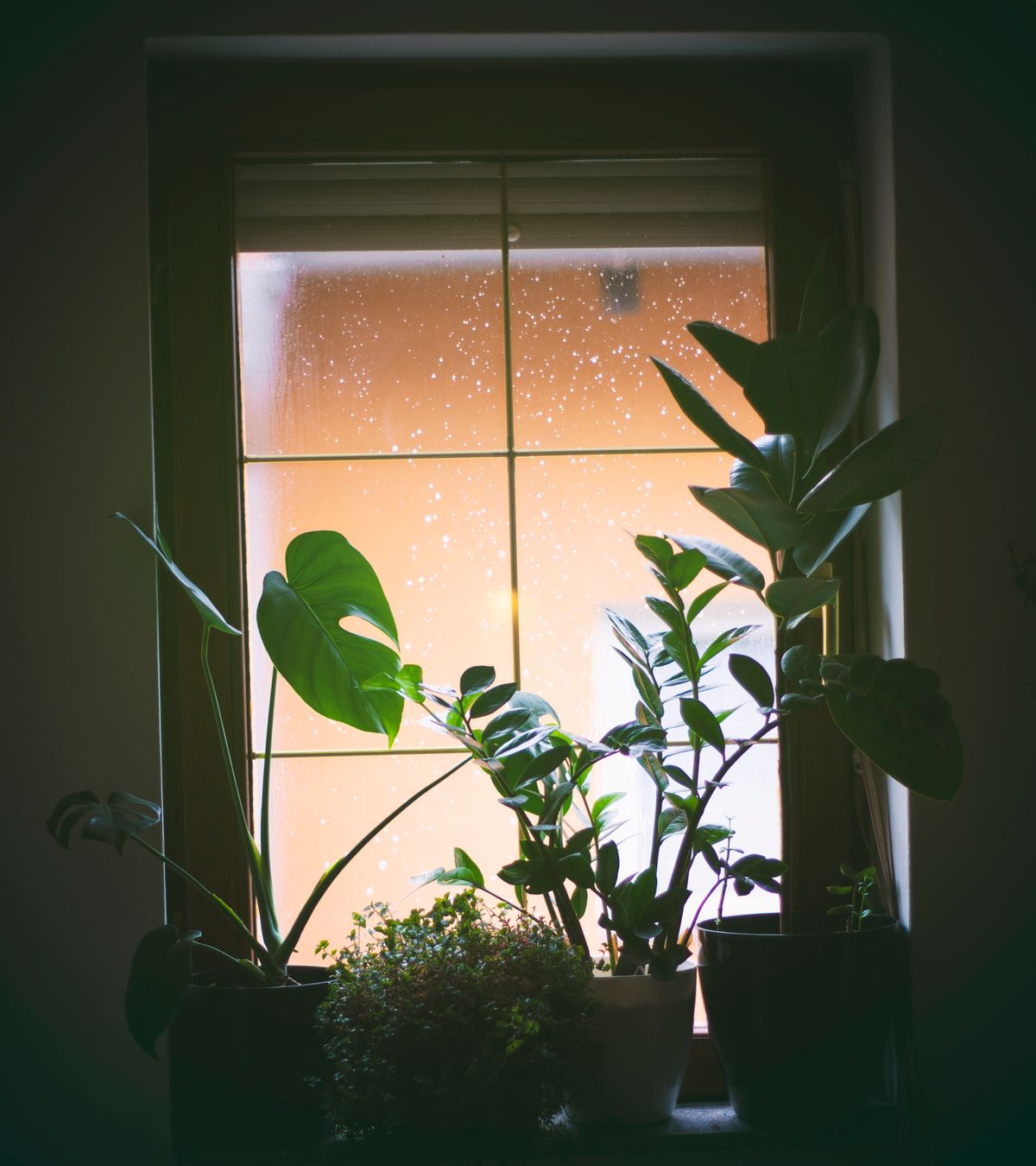
The short version
- No splits means not enough light. One extension service states the causal link outright.
- Leaves without holes are juvenile leaves, not damaged ones. This is a developmental stage.
- Long gaps between leaves point the same direction.
- Brown leaf edges are a separate problem, and they point at humidity rather than light.
- It is toxic to people and pets, all parts except the fully ripe fruit.
Why a monstera in low light never splits its leaves
University of Wisconsin Horticulture draws the line directly: It can be grown under florescent light, but will not develop the leaf perforations when light is inadequate.
That sentence does two useful things at once. It confirms a monstera can live under artificial light in a dim room, which is why so many survive in offices. And it tells you what that survival costs, which is the entire visual point of the species.
Seedling monsteras produce leaves that are small and unlobed, growing tightly against whatever they are climbing, and the characteristic split foliage arrives only as the plant matures. A monstera in poor light is stuck in that early stage. The plant is not damaged and it is not sick. It is young, and it stays young.
Penn State Extension adds the other visible symptom: Select a site near a sunny window where it can receive bright light but not direct sun. It will get 'leggy' in lower light.
Solid leaves and long bare stretches of stem are the same reading taken two ways. Both say the plant is spending what it has on reaching rather than on building.
What the holes are actually for
Worth knowing, partly because it is interesting and partly because both sources hedge it in a way that is worth preserving.
Penn State: The fenestrations are thought to allow for the wind to pass easily through the leaves.
Note "theoretically" and "thought to". Two extension services describing the same explanation, both declining to state it as settled. Other hypotheses exist, including light capture across a wider area for the same amount of tissue. I am repeating the hedge rather than smoothing it out, because a plant article that states this as fact is telling you something the sources will not.
What matters practically is unaffected either way: the holes belong to mature growth, and mature growth needs light.
How much light it actually wants
More than most people give it, and less than a sunny sill in July.
Wisconsin's summary is seasonal: As a houseplant, Monstera does best in bright light in summer and direct sun in winter. Penn State's is a position: near a sunny window, bright light, out of direct sun.
Those are compatible once you account for how much weaker winter sun is through glass. The target is the brightest spot you have that does not put the midday sun directly onto the leaves, and in a north-facing apartment that usually means as close to the glass as the plant will fit.
If you want a number for your particular spot before moving furniture, the light estimator returns a foot-candle range from six questions, and what a north-facing window actually gives covers why the first two steps back from the glass cost you more than the compass direction does.
Brown edges are a different problem
This is where monstera differs from the other plants in this series: it is the first one whose complaints split cleanly between light and air.
Wisconsin is specific: The leaf edges will turn brown if humidity is too low. Penn State gives a target: As in its native environment, monstera likes humidity, preferably above 50%.
Above 50 percent is a genuinely demanding figure for a heated apartment in winter, where 20 to 30 is more typical. So brown edges on a monstera are a plausible humidity signal in a way they are not for a pothos.
Before spending money on that, though, work through brown tips on houseplant leaves, because three of the four causes of browning leave evidence you can check today and humidity is the only one that does not. If it does turn out to be humidity, how to increase humidity for houseplants covers which methods do anything, and the short version is that misting is not one of them.
Watering
The two sources give slightly different instructions, which is worth seeing side by side rather than averaged.
Wisconsin: Water thoroughly and allow the soil to dry slightly between waterings, and water less in winter.
"Slightly" and "the top 1 to 2 inches" are the same instruction at different resolutions, and Penn State's is the one you can act on. Note that neither says to let it dry out completely, which separates monstera from a snake plant, where dry is the safe direction. A monstera in a dim room still wants less water than the same plant in a bright one, for the reasons in overwatering vs underwatering.
Moss poles
Penn State lists the options plainly: Moss sticks, trellises, bamboo stakes, and boards covered with sphagnum moss will all work.
In the wild this plant climbs, and its leaves get larger and more deeply cut as it ascends. The popular conclusion is that a moss pole triggers mature growth. What the extension sources actually support is narrower: monstera is a climber and these are the standard supports for it.
So treat a pole as a way to keep a big plant upright and growing in the direction it wants to go, which is upward and against something. If your leaves are small and solid, the evidence points at light first, and a pole in a dark corner is unlikely to change that.
If you have pets
Penn State is unambiguous: All parts of the monstera plant are toxic to humans and pets if ingested, with the exception of the fully ripe fruit.
Those large low-hanging leaves are within reach of most cats and dogs, which makes this more of a live question than it is for a plant on a high shelf.
If a pet or child has eaten part of one, call a veterinarian or a poison control line rather than searching. That call is the right first move and this page is not a substitute for it.
Common questions
Why is my monstera not splitting? Most likely light. Wisconsin states that a monstera grown under inadequate light will not develop the leaf perforations, so a plant that is otherwise healthy and simply not splitting is telling you about its position rather than its health.
Why does my monstera have small leaves and no holes? Small leaves and no holes together describe juvenile foliage, which is a developmental stage rather than damage. Young monsteras produce exactly that, and a plant in poor light stays in that stage indefinitely instead of growing out of it.
Do monstera leaves split as they get older? Yes, given enough light. Young plants produce small leaves without lobes or holes, and the split foliage arrives with maturity. Age alone in a dim room does not do it.
What causes monstera brown leaf edges? Wisconsin attributes brown leaf edges to humidity that is too low, and Penn State puts the preference above 50 percent, which most heated apartments fall well short of in winter. Rule out the visible causes of browning first, since humidity is the hardest one to confirm.
Does a monstera need a moss pole? It is a climber and supports of that kind are standard for it, per Penn State. Whether a pole by itself produces bigger, more split leaves is a stronger claim than the extension sources make. Light is the better first lever.
Is monstera toxic to cats? Yes. Penn State states that all parts are toxic to humans and pets if ingested, apart from the fully ripe fruit. Contact a vet if it happens.
Monstera in low light: one thing to check
Line up the last three leaves the plant produced, oldest to newest, and look at the holes.
More splits each time means the light is working and the plant is maturing. The same or fewer means it is holding at a juvenile stage, and no amount of fertilizer, repotting, or moss will change that answer. The trend across three leaves tells you more than any single leaf can.