
Calathea Brown Edges: Why It Happens in Apartments
Calathea brown edges come from two things a rented apartment struggles with: humidity under 60 percent and fluoride in tap water. Light is rarely the problem.
Calathea Brown Edges: Why It Happens in Apartments
Calathea brown edges are the most common complaint about this plant, and unlike everything else in this series, the cause is usually not light.
The three plants before this one in the plant section all failed in a dim room in their own way. Calathea is different. The light it wants is the light a north-facing apartment can actually supply. What it wants instead are humidity above 60 percent, water without fluoride in it, and a temperature that does not move much, and a rented apartment in winter is bad at all three.
(The genus was reclassified from Calathea to Goeppertia, which is why extension pages file it under the newer name. Everyone still calls it calathea.)
The short version
- Light is the easy part. Bright indirect or partial shade, no direct sun.
- Brown edges have two causes, and both are named by the same source: low humidity, or fluoride in tap water.
- It wants 60 percent humidity or more. A heated apartment runs 20 to 30.
- Curling leaves say the same thing as brown edges, in a different register.
- Wet foliage causes leaf spot, which sits awkwardly against needing humid air.
Light is the part you can already do
NC State Extension puts the requirement at bright, indirect light or partial shade, and flags both failure directions: Fading of the leaf color is caused by insufficient light, while direct sun can scorch the leaves.
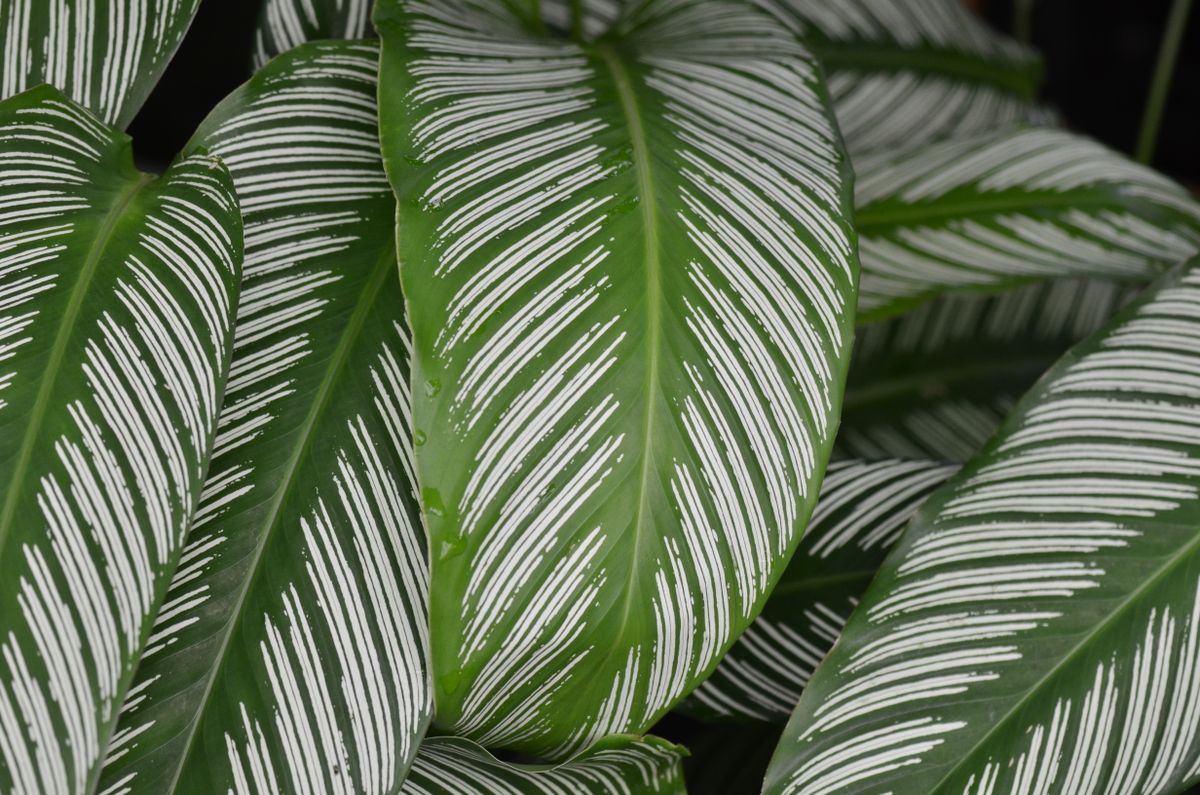
That is a genuinely achievable brief. A spot near a north window, or a step back from an east one, lands inside it. If the patterning on your leaves has gone flat and pale, that points at light, and the light estimator will tell you what your spot provides.
Everything else about this plant is harder than that.
Calathea brown tips and edges: the two causes
NC State names both in one sentence: Brown leaf edges and tips are the result of low humidity or from using tap water containing fluoride.
Neither is a care mistake in the usual sense. You can water correctly, position it correctly, and still get browning, because the two culprits are the air in your building and what comes out of your tap.
That also makes diagnosis awkward, since both produce the same mark. The practical route is to change one at a time, and water is the easier variable to isolate because it costs a few dollars and a month rather than an appliance.
Worth ruling out the cheaper explanations first, though. Brown tips on houseplant leaves sorts the four common causes by whether you can actually check them, and salt crust from fertilizer looks similar and announces itself on the pot rim.
Does calathea need distilled water?
Both NC State pages say yes, in nearly identical terms.
From the orbifolia page: Distilled water or rain water is preferred since the fluoride in tap water can cause the leaf tips to brown.
From the Medallion page: Use distilled or rain water to water this plant since tap water contains fluoride that can cause the leaf edges and tips to brown.
Two things follow that nobody mentions when selling you the plant.
It is a recurring cost and a standing errand. Distilled water by the gallon, all year, for one plant. Collected rainwater is free if you have anywhere to collect it, which in an apartment usually means a bucket on a fire escape or nothing.
It is also the one variable you can test on its own. Switch to distilled, change nothing else, and watch the leaves that open over the next month. Old damage will not reverse, so judge it entirely on new growth. If the new leaves come in clean, you have your answer cheaply. If they brown at the same rate, the problem is the air and you know to stop buying water.
Calathea humidity requirements
The number is high. NC State says high humidity of at least 60% is needed to make this plant thrive, and the Medallion page puts it above 60 percent as well.
A heated apartment in winter typically runs 20 to 30 percent. That is not a small gap to close, and it will not be closed by the methods people reach for first: how to increase humidity for houseplants covers why misting does nothing and why two extension services disagree about whether pebble trays accomplish anything measurable.
Temperature belongs here too, because the same page asks for Consistent temperatures of 65 to 75 degrees, with the Medallion page allowing room temperature should range from 65 to 85 degrees Fahrenheit. The operative word is consistent. A radiator that cycles, a drafty sash, or a room that drops overnight all work against this plant.
Put those together and you have the argument for an enclosure rather than an appliance. A cabinet holds humidity and buffers temperature at the same time, which is why calathea keeps appearing in them. The tradeoffs are in the IKEA greenhouse cabinet, including the part where warm, damp, still air is what fungal disease wants and a fan is what makes it safe. If you are costing one out, the cabinet planner works through the parts in the order they should be bought.
Calathea leaves curling
Curling is the same message as browning, delivered earlier.
NC State: The leaves can curl from lack of water or low humidity.
So a curled leaf sends you to two places: the pot, and the air. Check the soil first, since it is quicker and since this plant wants to be consistently moist but not wet or soggy, a narrower band than most houseplants ask for. If the soil is right, the curling is about humidity and you are back at the 60 percent problem.
One useful thing about curling: it responds. Unlike a browned edge, which is dead tissue and permanent, a curled leaf can open again when conditions improve. It is the closest thing this plant gives you to a live readout.
Leaf spot, and the contradiction it creates
The Medallion page adds a complication: Leaf spots can occur from wetting the leaves when watering or poor air circulation.
Set that against the humidity requirement and a genuine tension appears. The plant wants damp air and dry foliage, in a still room that is also well ventilated. Those pull in opposite directions, and the resolution is the same one the cabinet article arrives at: raise the humidity of the air, keep water off the leaves, and keep the air moving.
Practically, water at the soil rather than over the plant, and skip misting entirely. Misting fails at raising humidity anyway, and here it actively creates the wet foliage that causes leaf spot.
Is calathea hard to care for?
Not exactly hard. Particular, and particular about the things a rented apartment is worst at.
Nothing on its list is difficult in isolation. Bright indirect light is easy. Consistently moist soil is a habit. The difficulty is that it wants 60 percent humidity, fluoride-free water, and stable temperatures at the same time and continuously, and each of those is either an appliance, a standing errand, or a building you do not control.
So the honest advice for most people reading this site is to skip it, and put a monstera or a pothos in that spot instead. If you want one anyway, go in knowing you are committing to distilled water and an enclosure, not to a plant that will be fine on a shelf.
There is no shame in the other conclusion either. A calathea that is alive with some brown edges is a normal outcome in an apartment, and plenty of people keep them that way on purpose.
Common questions
Why does my calathea have brown tips? Two causes, per NC State: low humidity, or fluoride in tap water. Both produce the same mark, so isolate them one at a time. Water is the cheaper variable to test.
Does calathea need distilled water? NC State recommends distilled or rain water for exactly this reason, on both species pages. Tap water's fluoride is named as a cause of browning tips and edges.
What are calathea humidity requirements? At least 60 percent, which NC State describes as needed for the plant to thrive. Heated apartments in winter typically sit at 20 to 30, so this usually means a humidifier or an enclosure rather than a tray. Humidifiers for houseplants covers which specifications matter for a room this dry.
Why are my calathea leaves curling? Lack of water or low humidity, according to NC State. Check the soil first, since that is quicker to rule out, and note that curled leaves can recover while browned edges cannot.
Is calathea hard to care for? Its individual requirements are simple, but it wants high humidity, fluoride-free water and stable temperatures all at once and all the time. In a rented apartment that combination is the hard part, not any single item on the list.
Calathea brown edges: one thing to try first
Switch to distilled water for one month and change nothing else.
It is the only variable here you can isolate cheaply, and the result is readable: watch the leaves that open during that month, not the ones already marked. Clean new growth means it was the water. Same browning means it was the air, and you have saved yourself from buying gallons of water for a problem they were never going to fix.